Campus Connect
Role
Co-Developer & System Designer
Team
Najaf Arash Dastnaei
Joshua Mills Lamptey
Timeline
8 Months
Overview
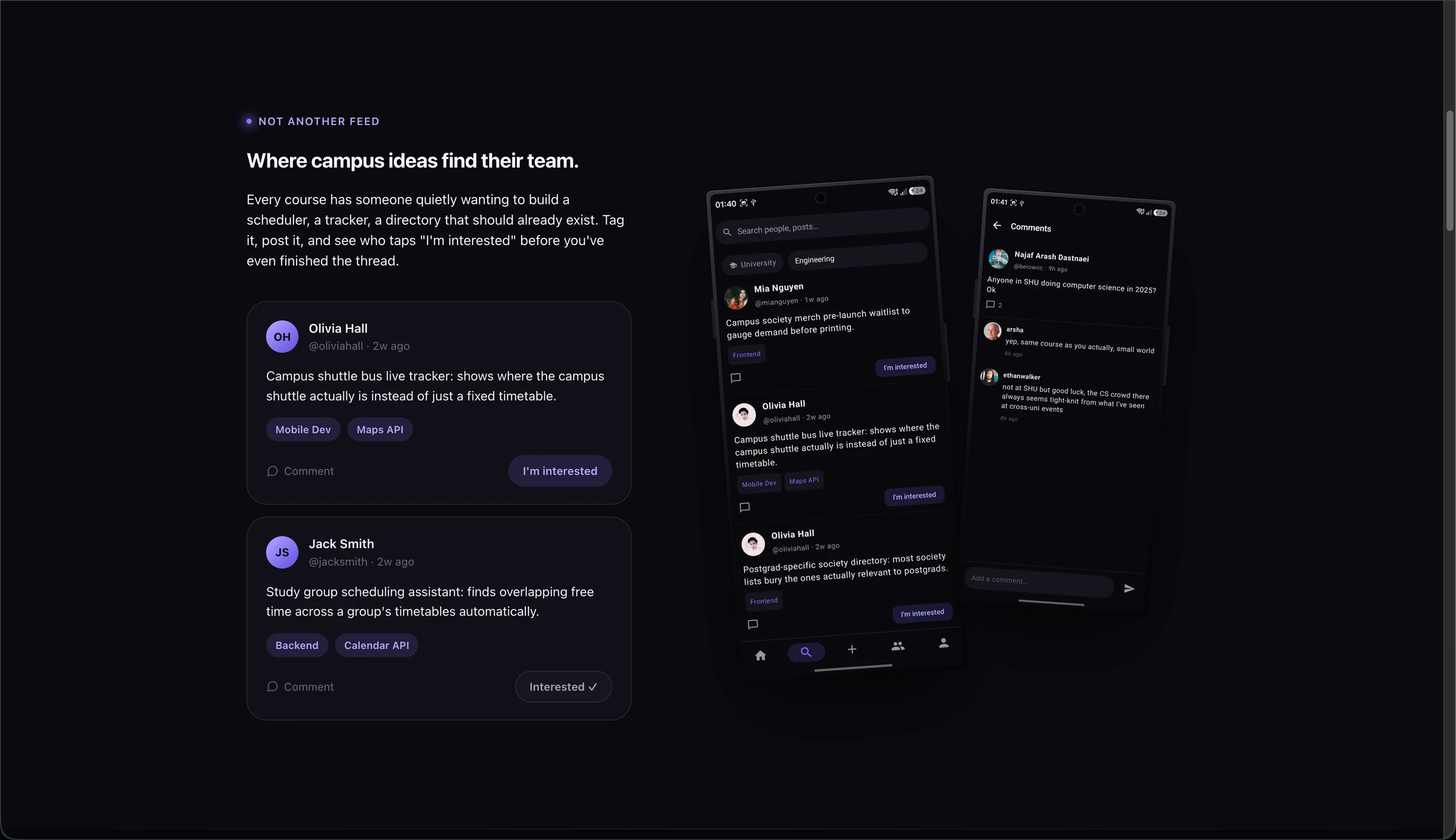
Campus Connect is a student-focused app designed to help university students connect, collaborate, and build a stronger campus community. The project aimed to solve the difficulty of meeting people with similar interests, finding potential project partners, and staying connected outside of lectures and societies. Alongside social connections, students can use the platform to find others to collaborate with on university projects, making it easier to form teams, share ideas, and work together.
Highlights
Campus Connect turns university from a place where students simply attend classes into a community where they can meet, collaborate, and build things together.
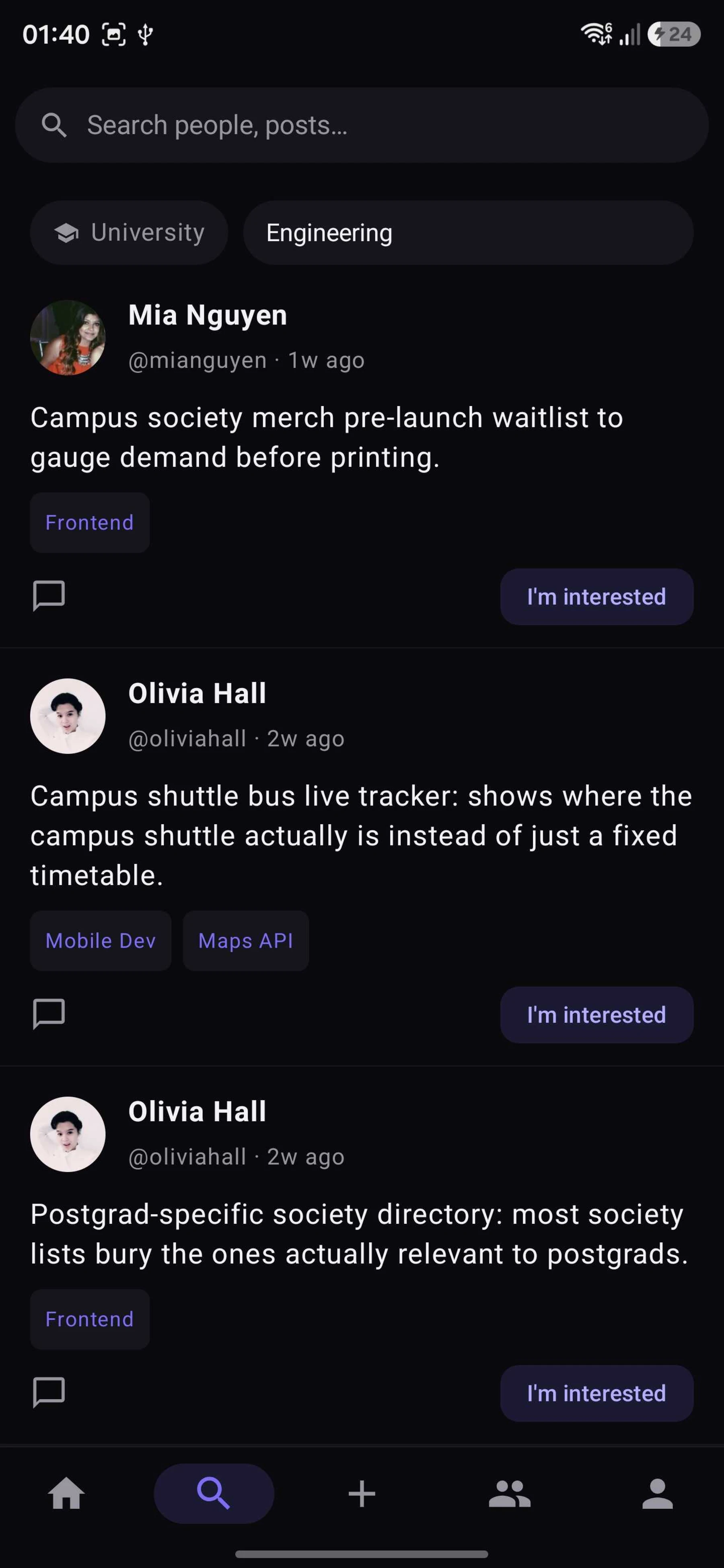
0.1Feed of project ideas, filterable by university and course.
Image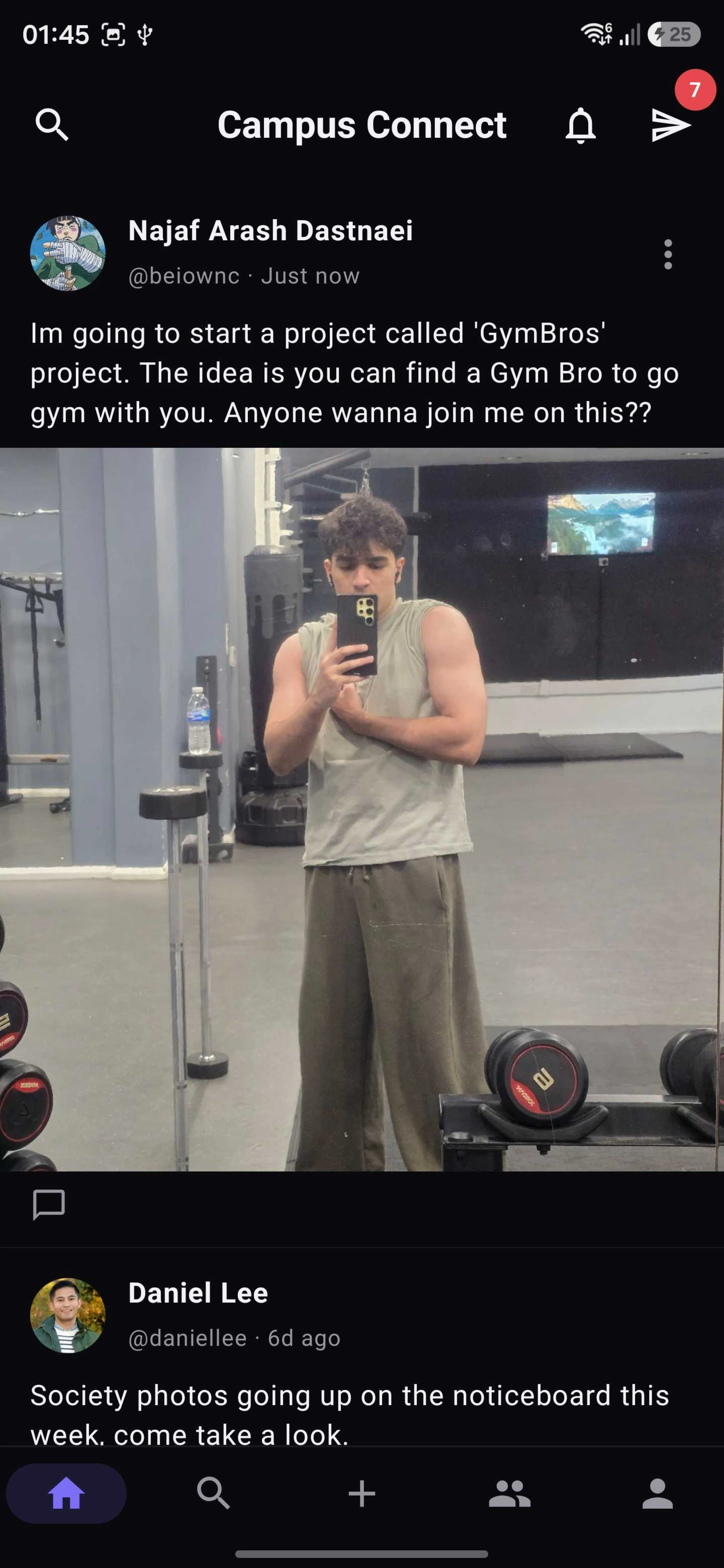
0.2Home feed where students post and back project ideas.
Image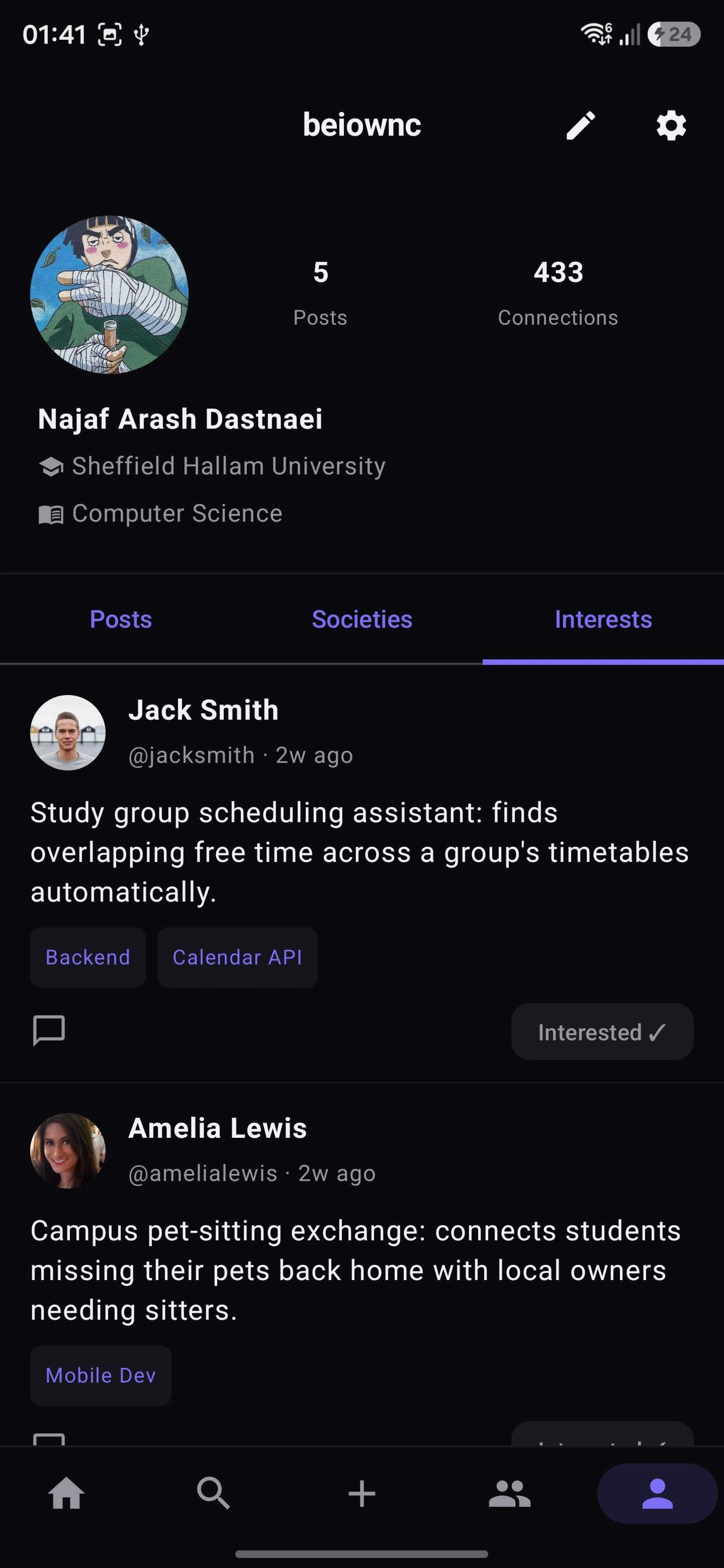
0.3Profile built from a student's university, course, and posted ideas.
Image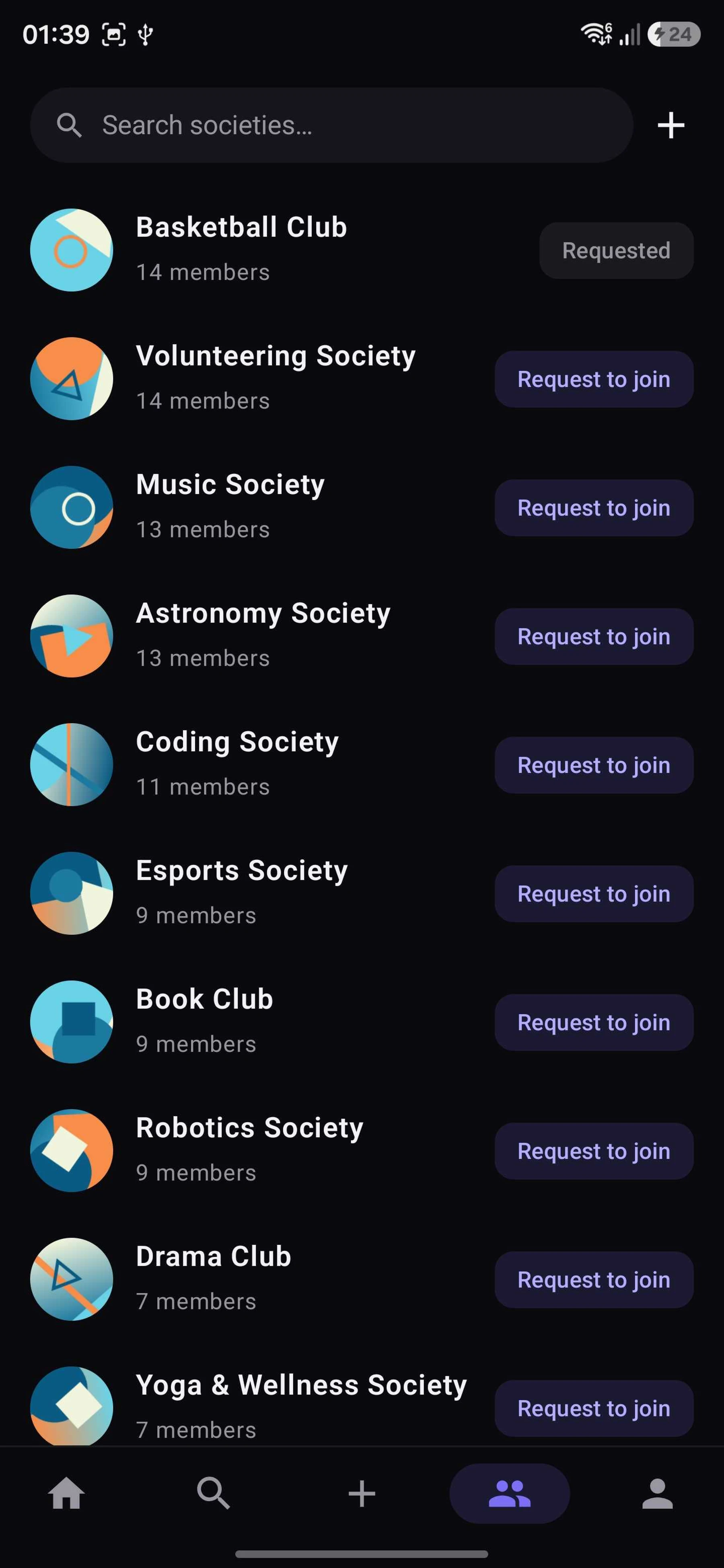
0.4Discovering and joining societies alongside project teams.
ImageThe Problem
University is full of people, but finding the right people isn't always easy.
Students need an easier way to connect beyond the classroom.
Starting university can make it difficult to meet people with similar interests, especially outside of lectures, societies, and existing friendship groups. At the same time, students working on projects often struggle to find reliable people with the right skills or interests to collaborate with. Campus Connect was designed to bring these needs together, giving students a dedicated place to discover people, make connections, and find potential project collaborators without relying on existing social circles.
Process
We focused on connecting students around shared interests and shared goals.
The solution grew from combining social discovery with practical collaboration.
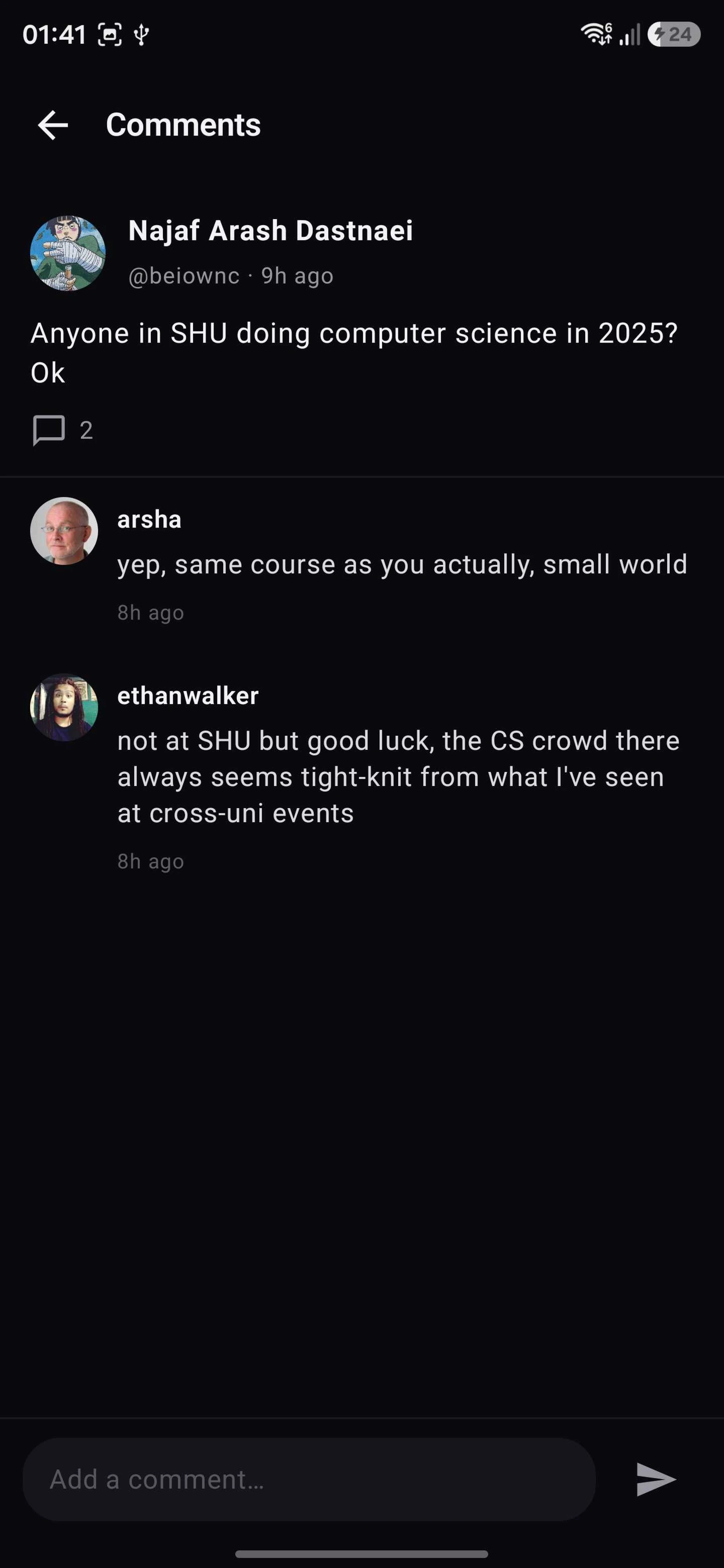
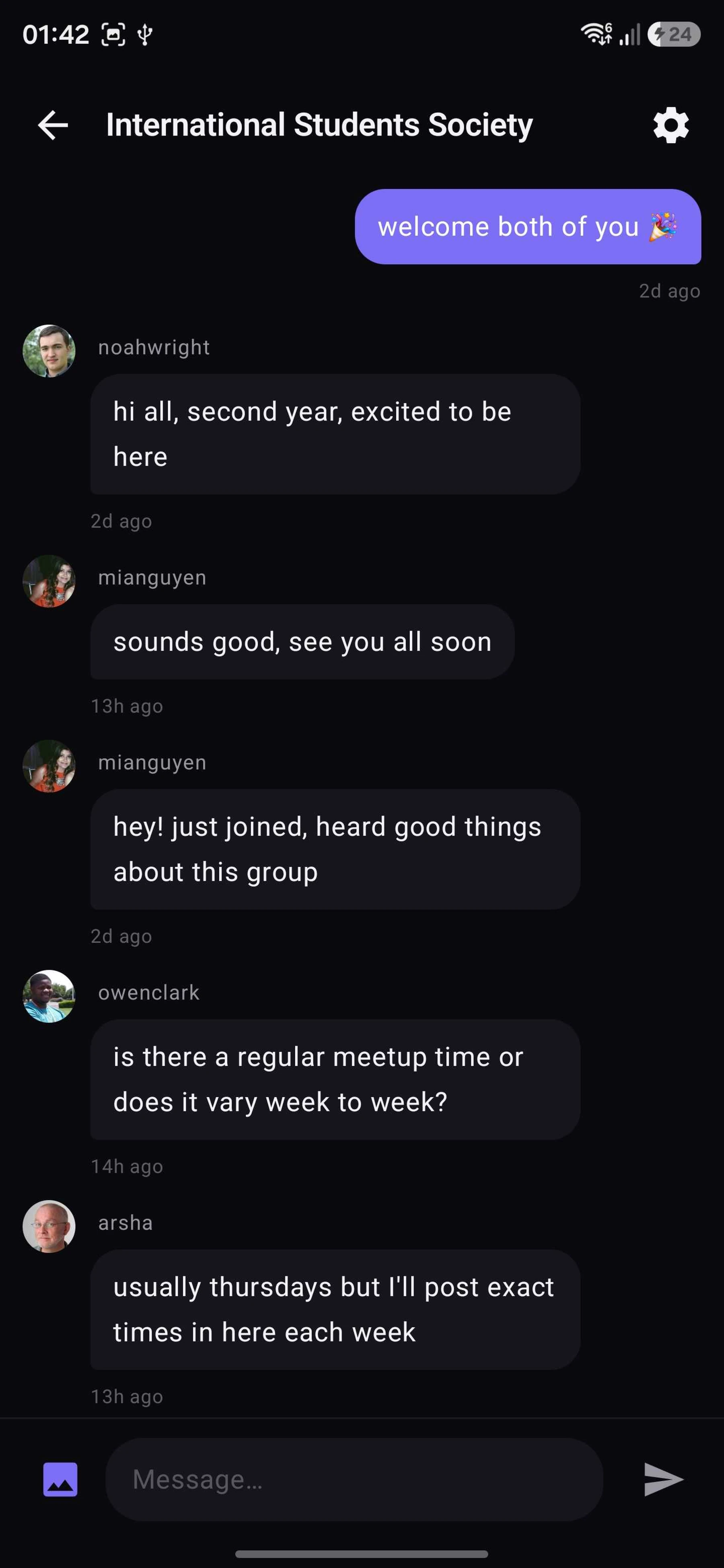
Two problems kept coming up: students wanting to meet people outside their existing circles, and students needing collaborators for university projects. Rather than treat these as separate features, we designed Campus Connect as one student network where both could happen naturally: profiles, interest-based discovery, connections, and project collaboration all in the same app. That kept the focus on meaningful connections rather than building another social feed.
Solution
One place to meet people, find collaborators, and build together.
The core experience is in place, with the UI and overall experience still being refined.
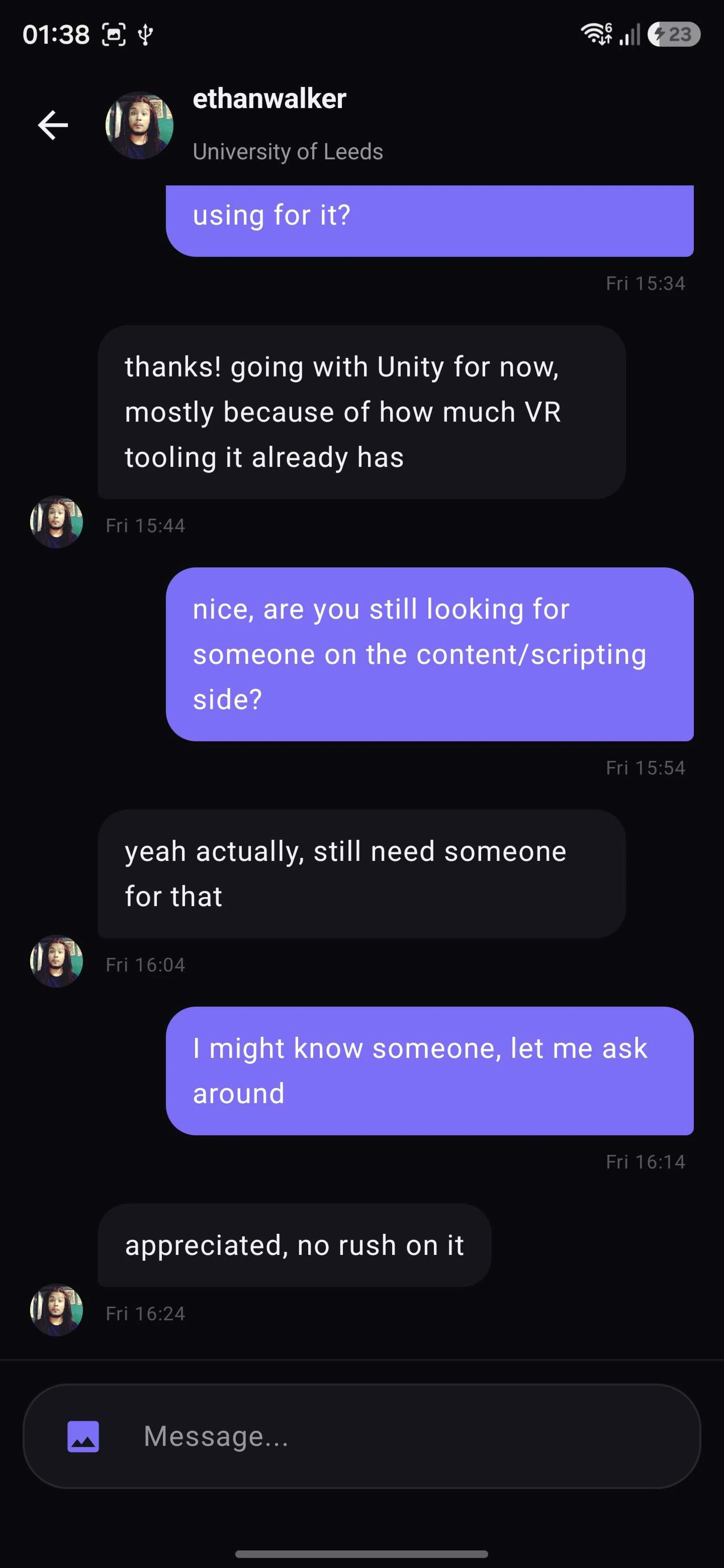
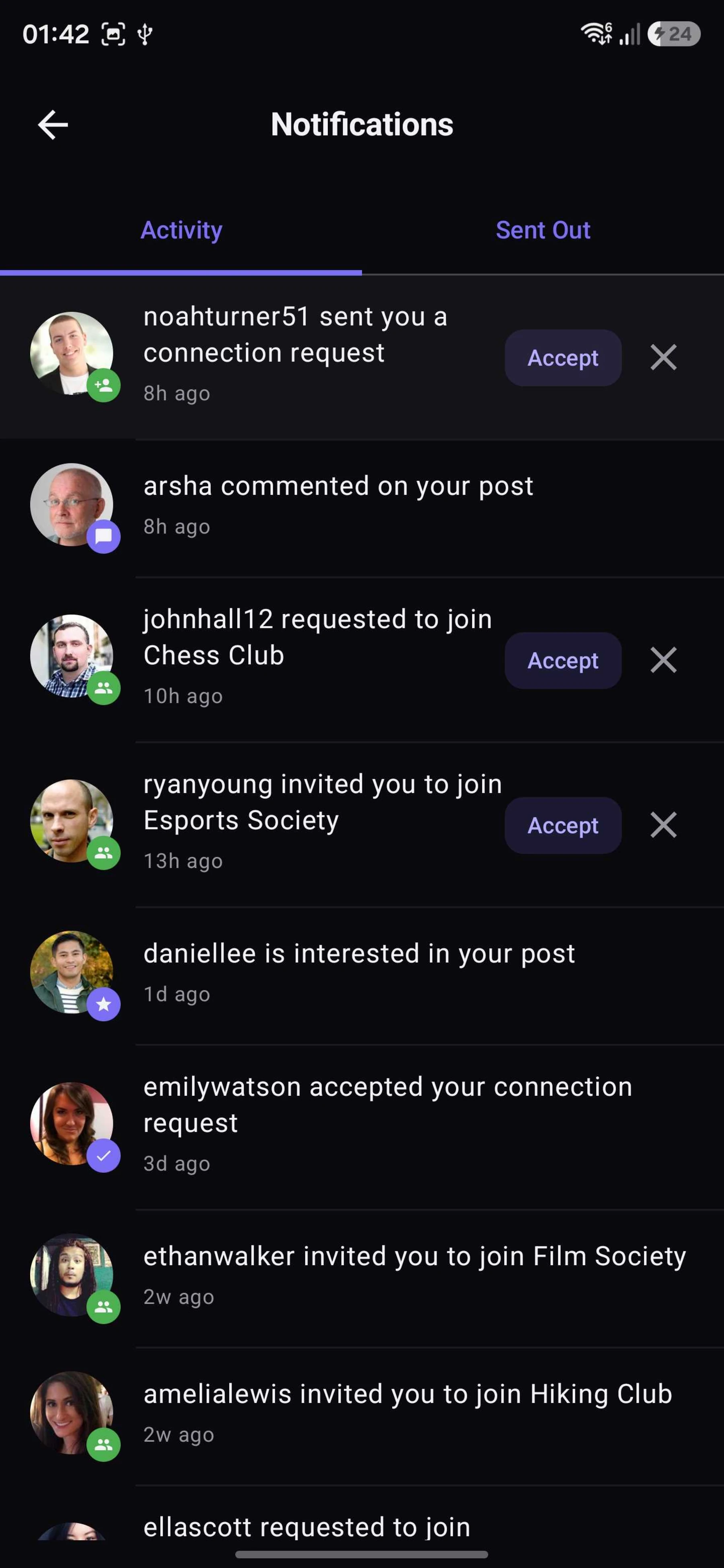
Student profiles, people discovery, connections, and project collaboration all live in one platform now: students can find others through shared interests, connect with new people, and find teammates for university projects in the same place. The core functionality is in place; the final design isn't. UI improvements, visual refinements, and usability changes are the next stage as the project continues to evolve.
Outcome
In Development
Building the backend for a social platform has been significantly more complex than a typical CRUD application.
Campus Connect is still in active development, and one of the biggest challenges has been understanding the complexity involved in building a social media-style application properly. Beyond profiles, connections, and messaging, the backend needs to support relationships between users, content, interactions, project collaboration, and the systems that determine what users should see. This introduces algorithms for things such as recommending relevant people, ranking or filtering content, and matching students based on shared interests or project requirements. Designing these systems alongside the database and backend architecture has been a significant learning experience. The next stage is focused on refining these foundations while continuing to improve the UI and overall user experience.